

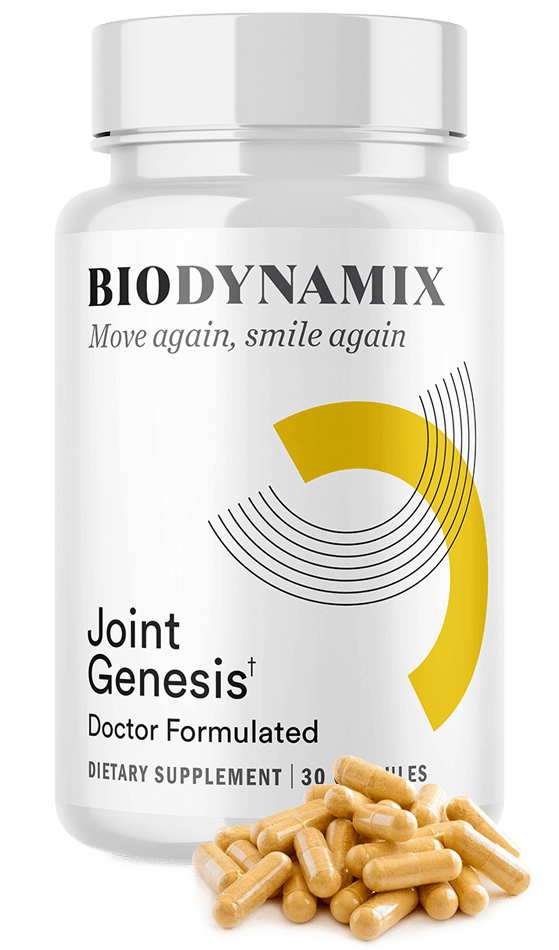
Joint Genesis ingredients: what’s inside the supplement and does it work?
If you’re researching Joint Genesis, one of the first questions is: what exactly is in the formula and can it plausibly support joint comfort and mobility? For a detailed product review, see Joint Genesis ingredients — full breakdown in our Joint Genesis review, but below we focus on the key ingredient claims and the practical points you need to know before deciding whether to try it.
What the maker says is in Joint Genesis
The marketing for Joint Genesis centres on a molecule called hyaluronan (also called hyaluronic acid or hyaluronate) and a traditional Japanese food source, the purple sweet potato known as satsumaimo. The product page explains the idea behind the formula: that certain populations in Yuzurihara, Japan, consume foods high in hyaluronan and seem to retain supple, comfortable joints into old age. The maker, presented as Dr Mark Weis, M.D., positions Joint Genesis as a supplement designed to support synovial fluid and maintain joint lubrication by addressing age-related losses of hyaluronan.
Hyaluronan: what it is and why it’s highlighted
Hyaluronan is a naturally occurring molecule in the body that helps retain water and contributes to the gel-like quality of synovial fluid, which sits inside joint cavities. The product literature cites experts and a Nutrition Journal study to say people with age-related joint problems have lower hyaluronan concentrations in their synovial fluid. The makers therefore claim the formula helps replenish or support healthy hyaluronan levels to keep joints cushioned and lubricated.
Important framing: this is how the product is marketed. Scientific papers do indicate hyaluronan plays a role in joint physiology, but whether an oral supplement can reliably raise synovial hyaluronan levels and produce meaningful clinical improvements depends on many factors, including dose, molecular weight, formulation and individual differences.
What the sales material does not fully disclose
- Full ingredient list and doses: the promotional text highlights hyaluronan and satsumaimo, but comprehensive ingredient panels and exact amounts per serving are not always immediately visible in marketing copy.
- Source and form of hyaluronan: hyaluronan can be supplied in different molecular weights which affect absorption; the maker’s materials do not always explain this in detail.
- Independent clinical trials: promotional pages may reference studies about hyaluronan or joint health generally, but that is different from robust, placebo‑controlled trials testing Joint Genesis itself.
What the evidence broadly says (and what it doesn’t)
Researchers acknowledge hyaluronan’s role in joint lubrication and structure. In clinical practice, hyaluronic acid injections into joints (not oral supplements) are sometimes used in osteoarthritis management, but injections and oral supplements are different routes of administration and cannot be assumed to have the same effects.
Some studies suggest oral supplements containing components that support joint structure — such as collagen, certain polysaccharides and possibly hyaluronan derivatives — may help with symptoms in some people. However, results vary and benefit often depends on product formulation, dose and study quality. The marketing around Joint Genesis references traditional diets high in hyaluronan-containing foods as inspiration, but that is observational and does not establish that the supplement will reproduce the effect.
Practical points to consider
Before trying a supplement marketed to support joints, consider the following:
- Check the full ingredient label and serving size. Look for exact amounts of any highlighted actives (for example, any hyaluronan or extract standardisation) and other ingredients such as fillers or excipients.
- Ask about source and form. If hyaluronan is the active, find out whether it specifies sodium hyaluronate, molecular weight, or a branded form.
- Consider existing treatments. If you have an established joint condition or are taking medication, discuss supplements with your GP or a pharmacist to check for interactions or contraindications.
- Watch for overstated claims. UK advertising rules require health claims to be substantiated; marketing language that guarantees outcomes should be treated with caution.
Safety and side effects
Hyaluronan and food-derived polysaccharides are generally well tolerated when consumed in normal dietary amounts. As with any supplement, side effects are possible — for example, minor digestive upset — and allergic reactions, while rare, can occur depending on the source material. Pregnant or breastfeeding people, and those with significant medical conditions, should consult a clinician before starting any new supplement.
Bottom line: consider claims, check the facts
Joint Genesis is marketed around the idea that supporting hyaluronan levels in the joint environment can promote healthy lubrication and flexibility. That concept has a biological basis, and the product draws on traditional dietary examples to make its case. However, marketing materials are not the same as independent clinical evidence for the specific supplement. If you’re thinking of trying Joint Genesis, look for a transparent ingredient list and dosing information, seek independent reviews or trial data where available, and discuss it with your healthcare professional if you have existing joint disease or are taking medicines.
Check Joint Genesis availability →
Medical disclaimer: This article is for information only and is not medical advice; speak to a healthcare professional for personalised guidance.
