


In 2025, a compelling body of research from the University of Jyväskylä in Finland shines new light on the longstanding question of how family habits influence transportation choices, particularly when it comes to school commuting. This groundbreaking study reveals a significant intergenerational link between the active commuting behaviors of parents during their childhood and those of their children today. Walking or cycling to school, long lauded for promoting physical activity among youth, appears to be more than just a convenient mode of transportation; it is a behavioral pattern deeply rooted in family traditions and parental influence. As concerns about childhood inactivity and environmental sustainability intensify globally, understanding these generational dynamics offers promising pathways to promote healthier lifestyles and sustainable mobility.
Active commuting not only fosters daily exercise but also cultivates lifelong habits tied to environmental consciousness and personal wellbeing. The study’s comprehensive analysis considers a range of moderating factors such as distance to school, socioeconomic status, urban or rural living areas, and parental attitudes, collectively shedding light on the complex web of determinants shaping children’s school commute choices in 2025. These findings resonate strongly with educational research exploring how childhood education and parental influence shape behavioral patterns, underscoring the critical role of intergenerational mobility in public health and urban planning strategies.
As societies grapple with increasing sedentary lifestyles and escalating transport emissions, this research presents a nuanced narrative about fostering sustainable habits through family lines. It also encourages policymakers, educators, and health professionals to recognize how fostering active commuting during formative years can ripple across generations, supporting both current and future wellbeing. The implications extend beyond individual families to broader community health and environmental sustainability goals, inviting a multidisciplinary approach to understanding and promoting active school commuting across generations.
Intergenerational Mobility in School Commuting: Unpacking Family Habits and Behavioral Patterns
The concept of intergenerational mobility traditionally focuses on economic or social status transferring from one generation to the next. Extending this concept to transportation choices and physical activity behaviors offers fresh insights into how family customs shape children’s school commute practices. This section delves into the essential role of parental influence in molding children’s commuting modes and how these choices echo across decades.
10 quick checks to spot low-quality supplements before you buy - plus research-backed doses for 12 common ingredients. Free PDF, no spam.
Research led by Tuuli Suominen explored active commuting behaviors by analyzing 660 parent-child pairs spanning two generations. The parents’ commuting habits from the 1980s were compared against their children’s modes in 2018, offering a rare longitudinal perspective on travel behaviors. By controlling for variables like school distance, parental education, and income, the researchers isolated the profound impact of prior family routines on present-day commuting patterns.
Key findings indicate that parents who actively commuted by walking or cycling to school during their youth tended to have children who adopted similar active commuting modes. This relationship reflects a set of shared behavioral patterns and attitudes towards active transportation embedded within family systems. Importantly, even after adjusting for environmental and social disparities, the intergenerational continuity persisted, substantiating parental influence as a pivotal factor in shaping commuting decisions.
- Early Exposure: Parents familiar with active commuting often facilitate walking or biking routes for their children, encouraging similar habits.
- Attitude Transfer: Positive parental attitudes towards active commuting increase children’s likelihood to adopt these modes.
- Environmental Modeling: Children tend to imitate transportation behaviors witnessed in their family environment.
| Factor | Impact on Intergenerational Commuting Patterns |
|---|---|
| Parental Active Commuting in Youth | Strong positive influence on children’s active commuting |
| Distance to School | Major determinant but does not overshadow parental influence |
| Socioeconomic Status | Moderates access and opportunities for active commute |
| Living Area (Urban vs Rural) | Shapes transportation options and safety perceptions |
These findings are consistent with broader educational research showing that childhood education and family socialization deeply influence lifelong lifestyle habits, including school commuting choices (source). Understanding these intergenerational patterns is crucial for designing effective interventions that foster sustainable physical activity opportunities for younger generations.

Parental Influence and Childhood Education: Shaping Transportation Choices Across Generations
Parents hold the reins in influencing children’s choices, especially regarding daily routines like school commute methods. This section examines how parental influence interacts with childhood education to embed lasting transportation habits.
Physical inactivity among youth is a growing concern linked to chronic health issues worldwide. Promoting active commuting during childhood not only helps instill healthy habits but also supports educational achievement by improving concentration and wellbeing. Studies reflect that children’s knowledge and attitudes about active commuting are often a direct product of parental modeling and the educational context they are exposed to. When parents emphasize the importance of physical activity and environmental considerations, children absorb these values and are more prone to replicate active commuting behavior.
For instance, a parent who commuted actively themselves is likely to emphasize benefits such as health gains, environmental impact, and practical commuting solutions, providing children with a rich educational context beyond formal schooling. This blend of experiential learning and conscious value transmission shapes a child’s preferences and notions about sustainable transportation.
- Role Modeling: Demonstrating active commuting lifestyles at home reinforces positive behaviors.
- Value Transmission: Parents passing on prioritization of health and environment through personal habits.
- Supportive Environment: Creating safe routes and encouraging independence in younger children.
| Parental Behavior | Impact on Child’s Commuting Decisions |
|---|---|
| Active Commuting Experience | Encourages children to use walking or cycling as daily transport |
| Communication About Benefits | Increases awareness and motivation for active commuting |
| Provision of Resources | Equips children with skills and safety knowledge |
Complementing direct family influence, school-based educational programs that advocate for active commuting further reinforce the behavioral patterns ingrained by parents. This dual influence system — combining childhood education and parental example — creates a robust framework for sustaining active transportation habits that can span generations. Such initiatives align with recent calls for integrated approaches to public health, urban design, and educational policies (source).
Analyzing Generational Patterns in Commuting Behavior: Longitudinal Insights
The study’s longitudinal design provides a unique vantage point on how generational patterns in school commuting behavior evolve or persist over time. This section explores these dynamics, paying close attention to the factors that bolster or mitigate the continuity of active commuting across generations.
The dataset originates from the Cardiovascular Risk in Young Finns Study (YFS), a valuable longitudinal cohort initiated in 1980 and expanded by 2018 into a three-generation framework. By comparing commuting data of original subjects in the 1980s with their children’s habits in 2018, researchers gained unmatched insights into lifestyle transmissions related to transportation choices.
- Age and School Grade: Influence of developmental stage on commuting mode and independence.
- Gender Differences: Variations in commuting choices influenced by social norms and safety concerns.
- Urbanization Trends: Changing living environments affecting accessibility and mobility options.
| Variable | Trend Impact on Commuting Behavior |
|---|---|
| Children’s Age | Stronger parental influence in earlier school years, diminishes with child’s independence |
| Gender | Boys more likely to cycle; girls more likely to walk or be accompanied |
| Living Area | Urban children have more infrastructure enabling active commuting |
The research highlights a notable decline in parental influence as children grow older, coinciding with a rise in peer impacts on commuting decisions. Importantly, the persistence of active commuting during primary school years, when children are more dependent on parental guidance, signals a critical window for intervention and habit formation. Recognizing these behavioral patterns is invaluable for tailoring strategies aimed at promoting sustained active commuting habits that counteract trends of physical inactivity and reliance on motorized transportation (source).
Promoting Sustainable School Commutes with a Focus on Family and Community Engagement
With evidence pointing to the intertwined nature of family habits and school commute choices, this section addresses practical strategies for encouraging sustainable transportation choices at the community and policy levels. Emphasis is placed on harnessing parental influence and educational platforms to instill lasting behavioral change.
Key approaches include:
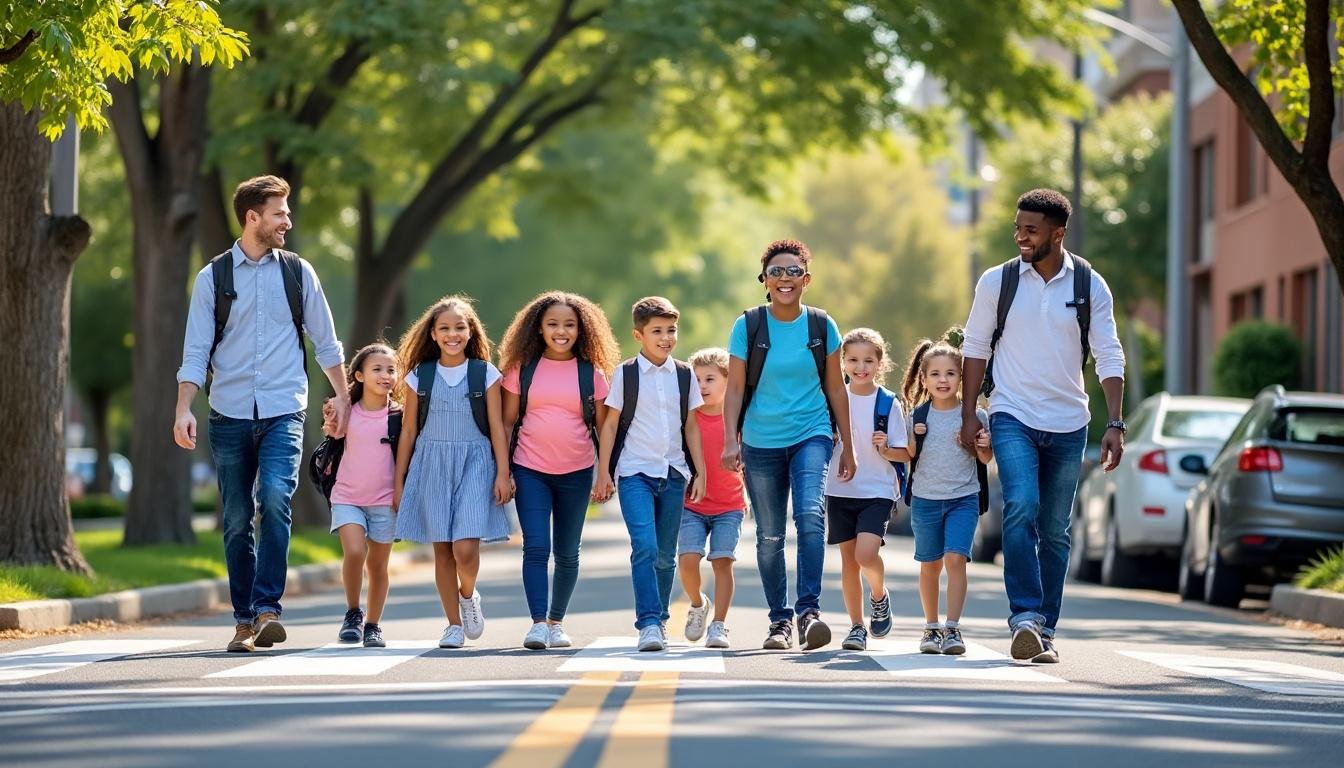
- Community-Based Programs: Initiatives like “walking school buses” or bike-train groups leverage social support to normalize active commuting.
- Infrastructure Improvements: Creating safe pedestrian and cycling pathways reduces barriers and encourages parental approval.
- Parent Engagement Workshops: Educating parents about the benefits and safety measures for active commuting promotes positive attitudes.
- School Policies: Integrating active commuting into school health and sustainability frameworks fosters institutional support.
- Multi-Generational Campaigns: Highlighting stories and data linking past family habits to current benefits can motivate participation.
| Strategy | Expected Outcome |
|---|---|
| Community Walk and Bike Groups | Increases safety perception and social motivation |
| Infrastructure Upgrades | Reduces commuting barriers and parental concerns |
| Parent Education | Bolsters support for active commuting habits |
| School-led Initiatives | Institutionalizes sustainable commuting culture |
| Intergenerational Awareness Campaigns | Strengthens family habit continuity |
Such strategies align with contemporary recommendations for addressing physical inactivity and environmental sustainability through collective action (source). By fostering a culture that values active commuting within families and communities, these efforts enable both immediate health benefits and long-term positive shifts in commuting behaviors.
Challenges and Future Directions in Understanding and Facilitating Intergenerational Commuting Patterns
Despite growing evidence supporting the intergenerational transmission of commuting behaviors, various challenges remain in fully understanding and amplifying these positive patterns. This section examines the obstacles and future research avenues necessary to deepen knowledge and improve interventions.
One significant challenge is addressing diverse transportation choices affected by varying geographical, economic, and cultural factors. For example, families living in more sprawling or unsafe areas may find active commuting less feasible, regardless of parental habits. Furthermore, shifts in educational systems, urban environments, and technology over decades complicate direct comparisons across generations.
Additional areas warranting exploration include:
- Impact of Digital Innovations: How emerging mobility technologies and apps influence commuting choices and whether they support or hinder intergenerational continuity.
- Socioeconomic Disparities: Investigating how income inequalities affect opportunities for children to engage in active commuting despite parental attitudes.
- Peer vs. Parental Influence: Understanding the evolving balance between family and social circles in shaping transportation behaviors during adolescence.
- Policy and Urban Planning: Evaluating how coordinated efforts at municipal levels can sustain or disrupt generational patterns.
| Challenge | Potential Impact | Future Research Focus |
|---|---|---|
| Geographical Constraints | Limits feasibility and safety of active commuting | Develop context-sensitive interventions |
| Economic Barriers | Restricts access to necessary resources and infrastructure | Explore socioeconomic inclusive policies |
| Technological Disruption | Changes commuting habits and social norms | Assess impact of mobility tech on behavior |
| Evolving Social Influences | Shifts balance from parental to peer influences | Research adolescent social dynamics |
By addressing these challenges, future studies can better tailor health promotion and urban design practices to reinforce positive intergenerational mobility in school commuting. This ongoing work is fundamental for achieving sustainable behavioral transformations for families and communities alike (source).
Frequently Asked Questions about Intergenerational School Commuting Patterns
- How strong is the link between parents’ and children’s active commuting habits?
Research indicates a modest but statistically significant connection that persists even after accounting for various factors such as distance and socioeconomic status. - Why is parental influence strongest during primary school years?
Young children depend more on parents for guidance and safety, so parents’ attitudes and behaviors have a greater impact at this stage compared to adolescence, where peers gain influence. - What role does childhood education play in commuting choices?
Childhood education supplements family influence by providing knowledge about the benefits of active commuting and promoting safety skills, reinforcing positive transportation behaviors. - How can communities encourage sustainable commuting practices?
Through community walking groups, improved infrastructure, parent workshops, and school policies that support and normalize active commuting, communities can foster sustainable habits. - What are key challenges in promoting intergenerational active commuting?
Challenges include geographical limitations, economic barriers, technological changes, and shifting social influences, all of which need to be addressed with tailored and inclusive strategies.
10 quick checks to spot low-quality supplements before you buy - plus research-backed doses for 12 common ingredients. Free PDF, no spam.
