

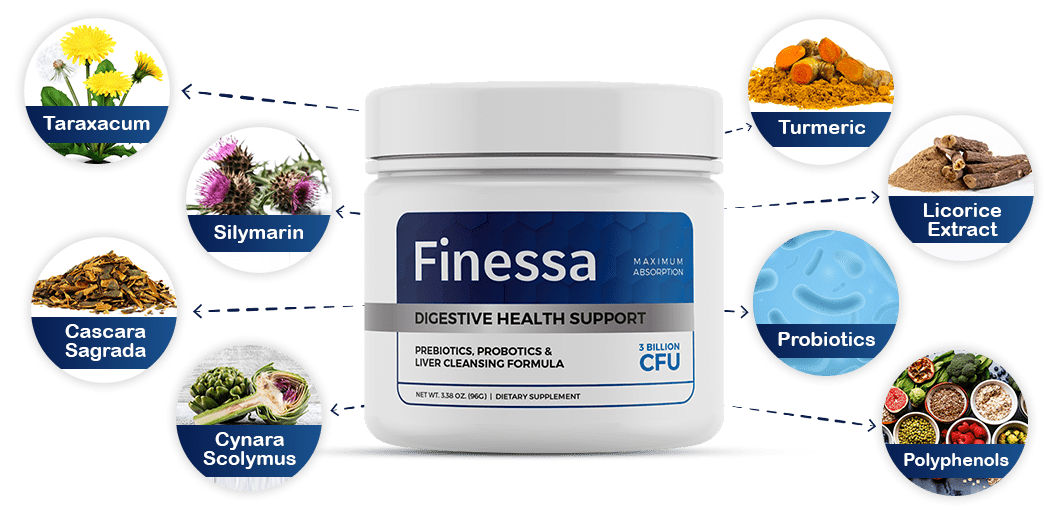
Finessa ingredients: what’s actually in the formula?
Finessa is marketed as a one‑scoop daily powder that supports the gut–liver axis to promote smoother digestion, regularity and a “flatter” belly. For broader background on the brand and how this product fits into the market, See the full Finessa review for context on these ingredients.
The official product pages describe Finessa as a blend designed to: boost bile flow, reduce gas, support the gut lining, flush out stubborn waste and support metabolism, energy and healthy cholesterol. The sales material emphasises that the formula contains “the finest, most powerful nutrients sourced from the purest ingredients” but the publicly available summary doesn’t show a full, itemised ingredient list with individual doses.
What the maker claims each ingredient group does
- Components that boost bile flow (commonly marketed in liver‑support formulas): claimed to help break down fats and speed digestion.
- Prebiotic fibres and bulk‑forming ingredients: typically intended to support regular bowel movements and a healthy colon environment.
- Probiotics or fermented ingredients: marketed to rebalance gut microbes and reduce gas/bloating.
- Herbal extracts (often seen in gut–liver supplements): usually claimed to support liver function, detoxification pathways and bile production.
- Digestive enzymes or bitters: presented as helping food break down faster and reducing sluggish digestion.
- Vitamins, minerals and antioxidants: included to support energy, skin health and metabolic processes.
These are the types of active components manufacturers commonly use in gut‑health blends; the Finessa product page frames its effects around these mechanisms (gut–liver axis optimisation, bile flow and colon cleansing). All claimed benefits should be read as marketing statements by the maker rather than proven therapeutic effects.
Why a clear ingredient list and dosing matters
When evaluating any multi‑ingredient supplement, including Finessa, look for three things on the label:
10 quick checks to spot low-quality supplements before you buy - plus research-backed doses for 12 common ingredients. Free PDF, no spam.
- Complete ingredient names (botanical names for herbs and strain IDs for probiotics).
- Exact doses per serving for each active ingredient, not just a total proprietary blend weight.
- Any standardisation information for herbal extracts (for example, % silymarin for milk thistle) and third‑party testing or certifications.
Without those details it’s hard to assess whether the amounts provided are likely to be meaningful or safe, or whether ingredients might interact with medicines or medical conditions.
How to check the Finessa label (practical steps)
If you’re considering Finessa, try to find the full supplement facts panel before buying. If it’s not on the primary sales page, look for it in the FAQ, on the order page, or request it from customer services. Key items to check:
- Does the label list botanicals with their Latin names and standardisation? (This reduces ambiguity.)
- Are probiotic strains identified (e.g. Lactobacillus rhamnosus GG) and is a CFU count given?
- Are digestive enzymes named (e.g. amylase, lipase) and are enzyme units or activities shown?
- Is there any allergen information (dairy, gluten, soy, nuts) and suitability for vegetarians/vegans?
- Are recommended use instructions and storage details provided? The maker states one scoop mixed into water each morning.
Safety, interactions and who should be cautious
Even natural ingredients can interact with medicines or be unsuitable for some people. For any gut‑ or liver‑targeted supplement (including products marketed like Finessa), consider the following:
- If you take prescription medicines (especially blood thinners, cholesterol drugs, diabetes medicines or hormone therapy), check for interactions — some herbal extracts and high‑dose vitamins can alter drug metabolism.
- If you have a diagnosed liver condition, gallstones, inflammatory bowel disease, or are pregnant or breastfeeding, seek professional medical advice before starting a new supplement.
- Start with a lower dose to assess tolerance if you have a sensitive stomach; some formulas can cause temporary gas, cramping or loose stools as the gut microbiome adjusts.
Practical buying tips and quality signals
Look for these markers of product quality when reviewing Finessa or similar blends:
- Transparent ingredient panel with doses.
- Manufacture in a UK or EU facility following GMP, or clear third‑party testing results.
- Customer service that will supply a full label, safety data and contact details.
Finally, remember that lifestyle factors — consistent fibre intake, adequate fluids, regular physical activity and managing stress — are central to digestive health and often make a bigger difference than any single supplement.
If you want to check current availability or buy Finessa, use the link below:
For tailored advice about whether a specific supplement is appropriate for you, consult your GP or a registered dietitian.
Medical disclaimer: This article provides general information and is not medical advice. Consult a healthcare professional for personalised guidance.
Related reading
- Finessa review: full verdict
- Finessa side effects and safety: What to know before you take it
- Finessa vs probiotics: Which is better for gut and liver support?
10 quick checks to spot low-quality supplements before you buy - plus research-backed doses for 12 common ingredients. Free PDF, no spam.
