

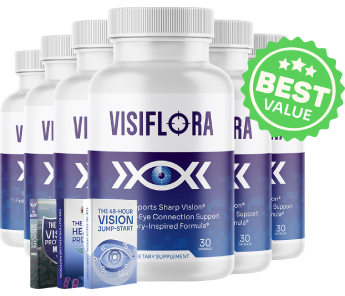
VisiFlora vs Florastor: quick overview
Compare options in our VisiFlora review — if you’re weighing VisiFlora vs Florastor, it helps to know these are positioned very differently. VisiFlora is marketed as a combined gut-and-eye supplement with a multi-ingredient formulation aimed at supporting the so-called gut–eye link. Florastor is a single‑strain probiotic (Saccharomyces boulardii lyo) marketed primarily for digestive health.
What each product is marketed as
VisiFlora: The maker presents VisiFlora as a “gut‑eye system” supplement. It’s promoted as a 22‑in‑1 formula combining vision nutrients (lutein, zeaxanthin, vitamin A, saffron, astaxanthin, zinc, etc.) with ingredients and extracts said to support gut barrier function and reduce lipopolysaccharide (LPS)‑related effects on the eye. The sales material emphasises premium, non‑GMO, vegan ingredients and a focus on long‑term eye comfort and clarity.
Florastor: Florastor contains the yeast Saccharomyces boulardii lyo and is commonly marketed for maintaining or restoring gut microbial balance, supporting normal bowel function, and as an option during or after antibiotics. It is a single‑strain probiotic rather than a multi‑nutrient vision formula.
Key differences at a glance
- Formulation: VisiFlora is a multi‑ingredient supplement combining vitamins, antioxidants and gut‑targeting extracts; Florastor is a single‑strain probiotic yeast product.
- Primary marketing focus: VisiFlora—vision support with gut‑eye connection language; Florastor—digestive health and microbial balance.
- Use case: VisiFlora is sold as an all‑in‑one daily supplement for people concerned about eye health and gut barrier support. Florastor is typically used short‑ or long‑term to support gut function, including around antibiotic use.
Ingredients and what the makers claim
VisiFlora’s labelled ingredients include eye‑targeted nutrients such as lutein, zeaxanthin, vitamin A, vitamin C and E, zinc, astaxanthin, saffron, bilberry and lycopene, plus a range of botanicals and antioxidants described as a “Gut‑Eye Barrier Complex” (grape seed extract, rutin, quercetin, taurine, alpha‑lipoic acid, etc.). The marketing claims these work together to support retina, macula and optic nerve health while reinforcing gut barrier function to reduce potential LPS‑related damage.
10 quick checks to spot low-quality supplements before you buy - plus research-backed doses for 12 common ingredients. Free PDF, no spam.
Florastor’s active ingredient is Saccharomyces boulardii lyo—a probiotic yeast. Manufacturers of Florastor present it as supporting healthy gut flora and bowel regularity, and often mention use alongside antibiotics or for temporary digestive upsets. As a single strain, its positioning is focused on gut outcomes rather than on eye health or multi‑nutrient protection.
Who might choose VisiFlora?
VisiFlora may appeal to people seeking a combined approach: someone looking for nutritional support that the maker claims targets both eye health and the gut‑eye connection. Its multi‑ingredient profile is aimed at users wanting antioxidants, carotenoids (lutein/zeaxanthin) and botanical extracts in one capsule.
Who might choose Florastor?
Florastor could suit people whose priority is straightforward gut support — for example, those wanting a well‑known single‑strain probiotic to maintain bowel health, help during antibiotics, or address short‑term digestive imbalance. Some users prefer single‑strain products because dosing and specific effects are simpler to track.
Safety, interactions and practical points
VisiFlora: As a multi‑ingredient supplement, VisiFlora contains vitamins, minerals and botanical extracts. Consumers should check individual ingredient lists if they are pregnant, breastfeeding, taking medication (including blood thinners or medications for blood sugar), or have specific allergies. High‑dose vitamins and certain botanicals can interact with medicines — the product literature lists compounds such as zinc, copper, selenium, chromium and herbal extracts that might require caution in some people.
Florastor: Saccharomyces boulardii is generally tolerated by many people and is yeast‑based rather than bacterial. However, probiotics (including yeast strains) are usually avoided in people with severely weakened immune systems or those with central venous catheters unless advised by a clinician. Always check with a GP or pharmacist if you have underlying medical conditions.
Evidence and realistic expectations
When comparing VisiFlora vs Florastor, remember that VisiFlora is marketed on the concept of a gut‑eye link and combines many ingredients that are individually researched for eye or gut effects. The manufacturer frames these as complementary actions for “vision support that starts in the gut.” Florastor’s claims centre on gastrointestinal outcomes linked to its single probiotic strain. Neither product should be viewed as a substitute for medical assessment or proven treatment for eye disease or serious gut conditions.
How to decide
Consider these questions:
- Is your primary concern eye health (e.g. wanting lutein/zeaxanthin, saffron, astaxanthin) or gut issues (e.g. antibiotic‑associated diarrhoea, recurring digestive upset)?
- Do you prefer a one‑stop multivitamin‑style approach, or a focused probiotic strain with a long track record?
- Are you on medications or do you have health conditions that require checking interactions with vitamins, minerals or botanicals?
If eye support is your main goal, the maker of VisiFlora markets it specifically for that role alongside gut‑targeted ingredients. If gut health alone is the priority, Florastor’s single‑strain probiotic profile may be sufficient and simpler to evaluate.
If you want to explore product specifics and how they compare in more detail, Check VisiFlora availability →
Please consult your GP or a registered clinician before starting any new supplement, especially if you have medical conditions or take prescription medicines.
Medical disclaimer: This article is for informational purposes and does not replace professional medical advice.
Related reading
- VisiFlora review: full verdict
- Symptoms and causes of gut dysbiosis: A guide to underlying digestive imbalance
- How probiotics may support eye health: The gut–eye connection explained
10 quick checks to spot low-quality supplements before you buy - plus research-backed doses for 12 common ingredients. Free PDF, no spam.
