
Close Menu
    Follow us on Google News
    Follow Livewell Magazine on Google News
    Facebook X (Twitter) Instagram
    LiveWell Magazine
    Facebook
    Follow LiveWell Magazine on Google News
    • Cancer

      Oncologists Reveal the Best Morning Habit for Optimal Health Before 9 A.M.

      August 26, 2026

      Effective Strategies to Minimize the Risk of Prostate Cancer Returning

      August 25, 2026

      What are the key actions you should take following a mesothelioma diagnosis?

      June 19, 2026

      The “Silent Killer”: 2 Hidden Signs of Pancreatic Cancer You Can Spot Years in Advance

      April 20, 2026

      Barry Manilow Opens Up About Embracing Healthier Lifestyle Choices During His Cancer Battle

      April 8, 2026
    • Fitness

      Unlocking Vitality: How Pickleball Empowers Adults Over 40 to Get Active and Build Strength

      August 6, 2026

      Unveiling the Science Behind Why Exercise Feels Tough for Many: Insights and Solutions

      June 27, 2026

      How can you revitalize your cardiovascular health with 8 engaging cardio tips for the reluctant fitness enthusiast?

      June 26, 2026

      Easy Habits to Make Your Workouts Feel Effortless

      June 25, 2026

      What are the top 5 strategies to walk faster and torch more calories?

      June 24, 2026
    • Health

      How to choose a supplement for dizziness and balance problems

      July 10, 2026

      How vestibular supplements work: Science behind balance and dizziness relief

      July 10, 2026

      Causes of vertigo: Common triggers and when to see a doctor

      July 10, 2026

      How to choose a joint supplement: Evidence-based checklist for better mobility

      July 10, 2026

      How collagen, glucosamine and turmeric work to support mobility

      July 10, 2026
    • Lifestyle

      Common ‘Healthy’ Habits That May Actually Harm Your Health

      September 2, 2026

      Simple Daily Habits Dermatologists Recommend for Glowing, Healthy Skin

      August 26, 2026

      Staying Strong: Tips for Maintaining Healthy Habits When You’re Under the Weather

      August 25, 2026

      NJ Startups Cadootz and Nomie Innovate to Cater to Picky Eaters

      August 24, 2026

      Simple Tai Chi Exercises to Strengthen Your Kidneys, Liver, Heart, and Spleen

      August 24, 2026
    • Nutrition

      South Carolina’s Healthy Food SC SNAP Demonstration Project Rescheduled to November 1, 2026

      August 28, 2026

      Virginia Tech Dietitian Reveals Expert Tips for Packing Budget-Friendly, Nutritious School Lunches

      August 13, 2026

      Top 7 Heart-Friendly Foods to Enjoy This July, Recommended by Expert Dietitians

      July 20, 2026

      Expert-Recommended Food Combinations That Boost Nutrient Absorption

      July 14, 2026

      Top 10 Most Beneficial Teas to Sip, Backed by Nutrition Experts

      July 12, 2026
    • Senior

      The Unexpected Health Threat Everyone Over 50 Needs to Know About

      August 8, 2026

      Doctors Reveal the Key Mindset Shift That Boosts Health After 65

      July 6, 2026

      How is the rise of telehealth benefiting senior citizens?

      June 4, 2026

      What are the essential approaches for promoting high-quality senior care and independence?

      May 6, 2026

      Nurturing Your Gut After 50: 7 Essential Habits for Lasting Digestive Wellness

      April 3, 2026
    • Trends

      Why is Zhiyin Zhou advocating for a human-centered approach in AI healthcare evolution?

      June 25, 2026

      What are the innovative approaches to autism therapy by psychologist Valeriia Manchuk?

      June 15, 2026

      What are the innovative techniques in permanent makeup for aesthetic and restorative purposes?

      June 2, 2026

      How could the 7 surprising travel trends of 2026 disrupt your wellness plans and how can you navigate them?

      April 15, 2026

      Which innovative skincare trends will shape the industry in 2026 according to Uliana-Sofiia Savchenko?

      April 6, 2026
    • Wellness

      Jervis Launches Innovative Program Promoting Healthy Hygiene and Mindfulness

      August 20, 2026

      Centrum Reinvents Healthy Aging: Embracing Proactive Wellness for Adults

      August 13, 2026

      Chamomile: 15 Health Benefits You Should Know, From Better Sleep to Improved Digestion

      August 8, 2026

      Glow Up Like a Hip-Hop Star: Essential Skin Care Habits for Radiant, Celebrity-Style Skin

      July 23, 2026

      Dr. Oz Shares 3 Simple, Medication-Free Strategies to Enhance Your Health for Free

      July 12, 2026
    Subscribe
    LiveWell Magazine
    Home»Screenings & Prevention»Flu activity is rising across the US, with an H3N2 “subclade K” variant in the spotlight
    Screenings & Prevention

    Flu activity is rising across the US, with an H3N2 “subclade K” variant in the spotlight

    Frank JostBy Frank JostNo Comments
    Facebook Twitter Email WhatsApp Pinterest LinkedIn Reddit Telegram Threads
    Share
    Facebook Twitter LinkedIn Email Reddit Telegram WhatsApp Threads

    Holiday travel, packed stores, family gatherings — this time of year brings a lot of togetherness. It also brings a predictable side effect: more germs moving from person to person. New national tracking shows that flu-like illness is climbing in the United States, and many labs are detecting a newer flu offshoot often referred to as H3N2 subclade K.

    For the week ending December 6 (the first full week after Thanksgiving), the share of doctor visits for fever plus cough or sore throat rose to 3.2%, exceeding the “epidemic threshold” used by many public health experts to signal that flu season is underway. In plain terms: the winter surge is starting, and older adults have the most to gain from acting early.

    What the latest surveillance signals mean (and why seniors should pay attention)

    Flu season can be defined by the calendar (often starting around early October), but what matters most is real-world activity — people showing up sick, positive tests, and hospitalizations. This season’s rise in flu-like illness suggests wider community spread is already happening in multiple areas.

    Recent updates indicate that at least 14 public health jurisdictions are reporting moderate to high flu activity, with many of the higher levels concentrated in the Northeast. Reports also show notable activity in places like Louisiana and Colorado, along with increases in several other states and territories. The season has also recorded its first reported pediatric flu death in the US — a sobering reminder that influenza is not a “minor cold.”

    FREE GUIDE
    The Supplement Safety Checklist

    10 quick checks to spot low-quality supplements before you buy - plus research-backed doses for 12 common ingredients. Free PDF, no spam.

    We respect your inbox. Unsubscribe anytime.
    Thank you! Download your checklist here.

    Early clues this could be a tougher-than-usual season

    Some state-level trends are raising eyebrows. In New York state, officials have reported flu cases increasing earlier than typical and flu-related hospitalizations rising quickly week over week. When hospital admissions climb fast, it can be a sign that more people are getting severely ill — especially those at higher risk, including seniors and people with chronic conditions.

    Related Article :  How will Spain's holiday rental restrictions impact your travel plans?

    One reason experts are watching closely is the strain pattern. Many of the viruses being analyzed by US labs so far this season have been linked to subclade K, a variant within influenza A(H3N2). Historically, seasons dominated by H3N2 tend to be harder on older adults, often leading to more doctor visits, complications, and hospital stays.

    Why “subclade K” is getting attention around the world

    The US isn’t the first place to see this variant show up. Several countries have reported busy, early flu seasons with subclade K in the mix. Australia — often watched because its winter comes earlier — recorded an unusually large number of confirmed flu cases during its season, and other regions have also described heavy activity.

    That said, flu is famously unpredictable. A rough season elsewhere does not guarantee the same outcome in the US. Last year’s flu burden was already high in many areas, and some experts suspect that recent exposure could provide a bit more population-level immunity this year. Still, a shifting variant can change the equation — and for older adults, it’s smart to prepare for the season you don’t want rather than the season you hope you’ll get.

    Do this year’s flu shots help if the variant is “new”?

    Subclade K was identified after the seasonal vaccine strains were selected, so it is not an exact match to what’s inside this year’s shot. But “not exact” doesn’t mean “not useful.” Flu vaccines can still offer meaningful protection when they’re closely related to circulating viruses, especially when it comes to lowering the odds of ER visits, hospitalization, and severe complications.

    Early performance data from the United Kingdom suggested that protection against serious outcomes remained substantial in children and moderate in adults, including older adults. Researchers also noted that antibody responses against subclade K appeared weaker than against some other strains — but the real-world benefit still mattered. Importantly, vaccine manufacturing methods differ across countries (for example, cell-based versus egg-based production), so results may not translate perfectly from one nation to another.

    Related Article :  The Unexpected Superfood to Boost Your Health as You Get Older, Reveals New Research

    Bottom line for seniors: if you haven’t gotten your flu shot yet, now is still a good time. Immunity ramps up over about a week, and every day you delay is a day you’re unprotected while community spread increases.

    Action Why it matters for older adults Best timing
    Get vaccinated Helps reduce the risk of severe illness, hospitalization, and complications As soon as possible during the surge
    Test early if symptoms start Flu antivirals work best when started early Ideally within the first 1–2 days
    Mask in crowded indoor spaces Reduces exposure when flu activity is high Especially during travel, shopping, events
    Improve indoor air Ventilation/filtration lowers the concentration of virus in shared air During gatherings and winter months

    Flu shot reminders for families and caregivers
    While seniors face the highest risk of severe outcomes, children are also vulnerable — and vaccination rates in kids have been lower than in recent seasons. That matters for grandparents, too, because kids can bring influenza home from school or activities and unknowingly share it at family gatherings.

    Last season, the US recorded an unusually high number of pediatric flu deaths, and where vaccination status was known, most of those children were unvaccinated. If you’re a grandparent or caregiver, encouraging vaccination across the household is one of the simplest ways to help protect the most vulnerable family members.

    How to lower your risk beyond vaccination

    Flu shots are a key layer of protection, but they’re not perfect. You can still get infected after vaccination — the goal is to make infection less dangerous and reduce the chance it turns into pneumonia, severe dehydration, or a hospitalization.

    Adding a few practical habits can significantly reduce risk during peak weeks:

    • Wear a well-fitting mask in crowded indoor places (airports, public transit, packed stores, concerts, waiting rooms).
    • Choose fresh air: crack windows during gatherings, use a portable air purifier when possible, and avoid stale, poorly ventilated rooms.
    • Keep distance from obvious illness, even if it feels awkward — a polite “let’s reschedule” can prevent a serious outcome.
    • Wash hands after public outings and before eating, and avoid touching your face when you’re out.
    Related Article :  What if aging is your superpower? New science says yes

    If you’re hosting, remember that small changes help: spacing seating, shortening the event, improving airflow, and encouraging anyone with fever or a hacking cough to stay home.

    Know the flu’s “sudden hit” symptoms — and don’t wait to act

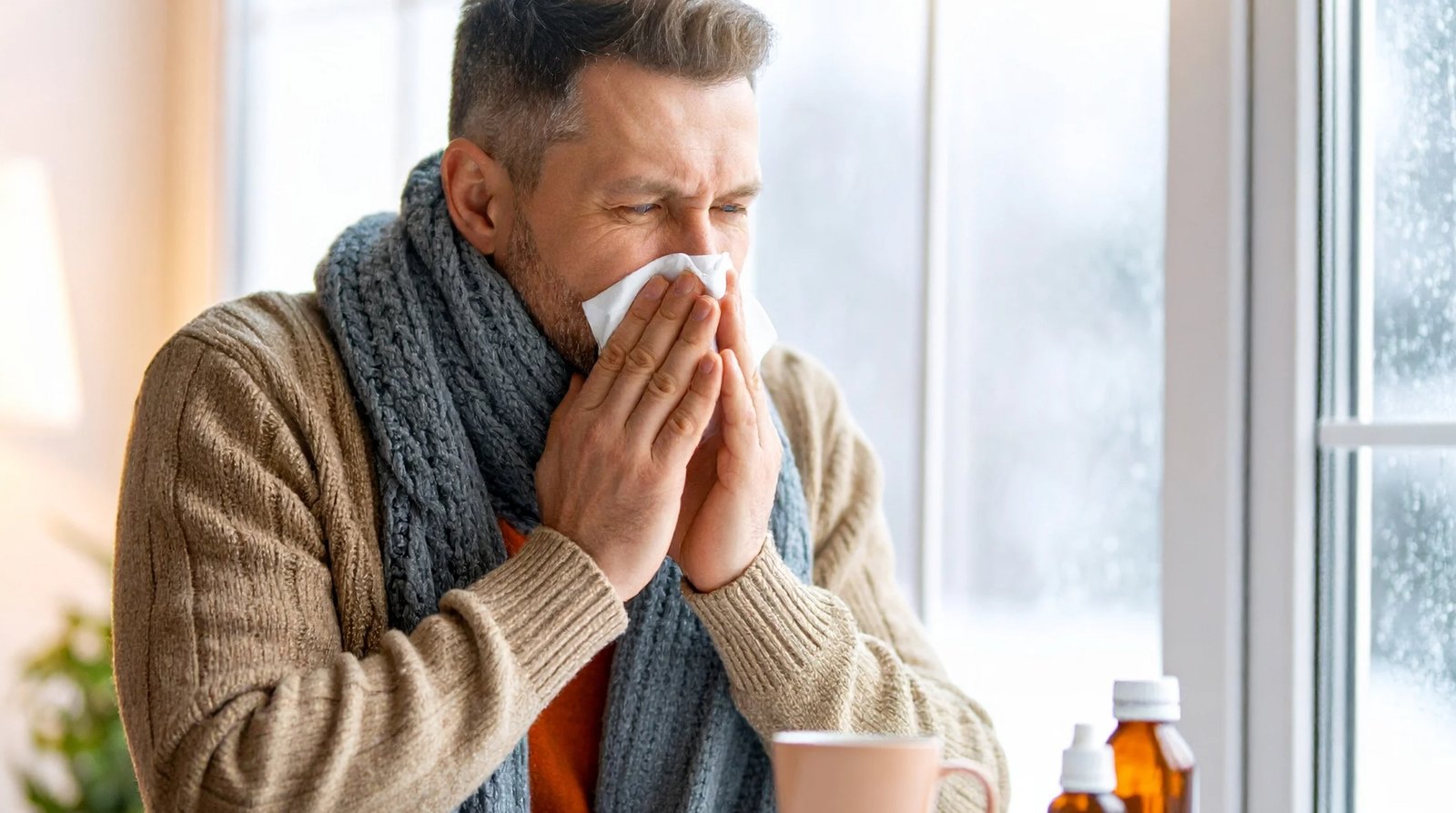
    Influenza often arrives fast. Many people describe it as being “fine in the morning and flattened by afternoon.” Common symptoms include high fever, chills, body aches, fatigue, cough, and sore throat. For older adults, the fever may be less dramatic, but weakness, confusion, or a sudden decline in function can be a warning sign.

    If you develop symptoms, talk with a clinician promptly about testing and whether an antiviral medication is appropriate. These treatments are most effective when started within about 48 hours of symptom onset — which is why “wait and see” can be the wrong strategy for seniors.

    Seek urgent medical care now if you notice… Why it’s urgent
    Shortness of breath, chest pain, or bluish lips/face Can signal serious lung involvement or low oxygen
    Confusion, severe weakness, fainting, or sudden worsening Older adults may decompensate quickly
    Dehydration (dizziness, very little urine, unable to keep fluids down) Dehydration raises complication risk and can become dangerous
    Fever that returns after improving, or symptoms that rapidly worsen Could indicate a secondary infection, such as pneumonia

    Medical note: This article is for general information and isn’t a substitute for medical advice. If you’re 65+ (or have heart disease, lung disease, diabetes, kidney disease, immune suppression, or other chronic conditions), contact your healthcare provider early when symptoms begin.

    FREE GUIDE
    The Supplement Safety Checklist

    10 quick checks to spot low-quality supplements before you buy - plus research-backed doses for 12 common ingredients. Free PDF, no spam.

    We respect your inbox. Unsubscribe anytime.
    Thank you! Download your checklist here.
    Follow on Google News
    Share. Facebook Twitter LinkedIn Email WhatsApp Reddit Telegram Threads Copy Link
    Previous ArticleToxicity management for older patients
    Next Article Parkinson’s disease is rising worldwide — 5 science-informed habits that may help lower your risk
    Avatar photo
    Frank Jost

    Frank is a seasoned media consultant for LiveWell Magazine, with over two decades of experience in the digital media landscape. His expertise spans online publishing, audience engagement strategies, and health communication. A recognized expert in mutual health insurance, Frank brings a unique perspective that bridges the gap between public health awareness and digital storytelling. He is passionate about making reliable health information accessible to all, and continues to help readers navigate the complexities of wellness and insurance in the digital age. https://www.linkedin.com/in/frank-jost-2097104/

    Continue reading

    The Unexpected Health Threat Everyone Over 50 Needs to Know About

    By FRANK JOST

    Doctors Reveal the Key Mindset Shift That Boosts Health After 65

    By FRANK JOST

    Expert Tips for Keeping Your Cut Flowers Fresh and Vibrant

    By FRANK JOST

    Is Your Lawn Care Doing More Harm Than Good? How Common Watering Mistakes Damage Your Grass

    By FRANK JOST

    Weekend Behaviors That Silently Raise Your Risk of Diabetes

    By FRANK JOST

    How long does the shingles vaccine really protect you?

    By Amelie Goujon

    What are the advantages of timely diagnosis of venous disorders at vein clinics?

    By Amelie Goujon

    What are the essential tips from OB-GYN Tetiana Mielikhova for gynecologic cancer prevention?

    By Amelie Goujon

    Actxa and LIF Forge Strategic Alliance to Revolutionize Preventive Healthcare Together

    By FRANK JOST

    How is the rise of telehealth benefiting senior citizens?

    By Amelie Goujon

    What are the essential approaches for promoting high-quality senior care and independence?

    By Amelie Goujon

    What is the truth behind common Lyme disease myths and misconceptions?

    By Amelie Goujon
    Add A Comment
    Leave A Reply Cancel Reply

    Subscribe to Our Newsletter

    Join the Live Well Magazine Newsletter and get exclusive tips on health, wellness, lifestyle, and personal growth — straight to your inbox.

    Trending

    The Leadership Challenge Companies Attempt to Solve from the Outside In

    Lifestyle & Habits

    Common ‘Healthy’ Habits That May Actually Harm Your Health

    What Happened When I Consumed 30 Grams of Protein at Breakfast Daily for One Week

    Common Habits That Might Be Hindering Your GLP-1 Weight Loss Progress

    Parenting & Family

    Stronger Starts: The Crucial Impact of the First 1,000 Days for Expecting Mothers and Their Babies

    Nutrition

    South Carolina’s Healthy Food SC SNAP Demonstration Project Rescheduled to November 1, 2026

    Facebook
    • About us
    • Contact us
    • Contributors
    • Legal
    • Privacy
    © 2026 livewellmagazine.org.

    Type above and press Enter to search. Press Esc to cancel.

    FREE GUIDE
    The Supplement Safety Checklist

    10 quick checks to spot low-quality supplements before you buy - plus research-backed doses for 12 common ingredients. Free PDF, no spam.

    We respect your inbox. Unsubscribe anytime.
    Thank you! Download your checklist here.