

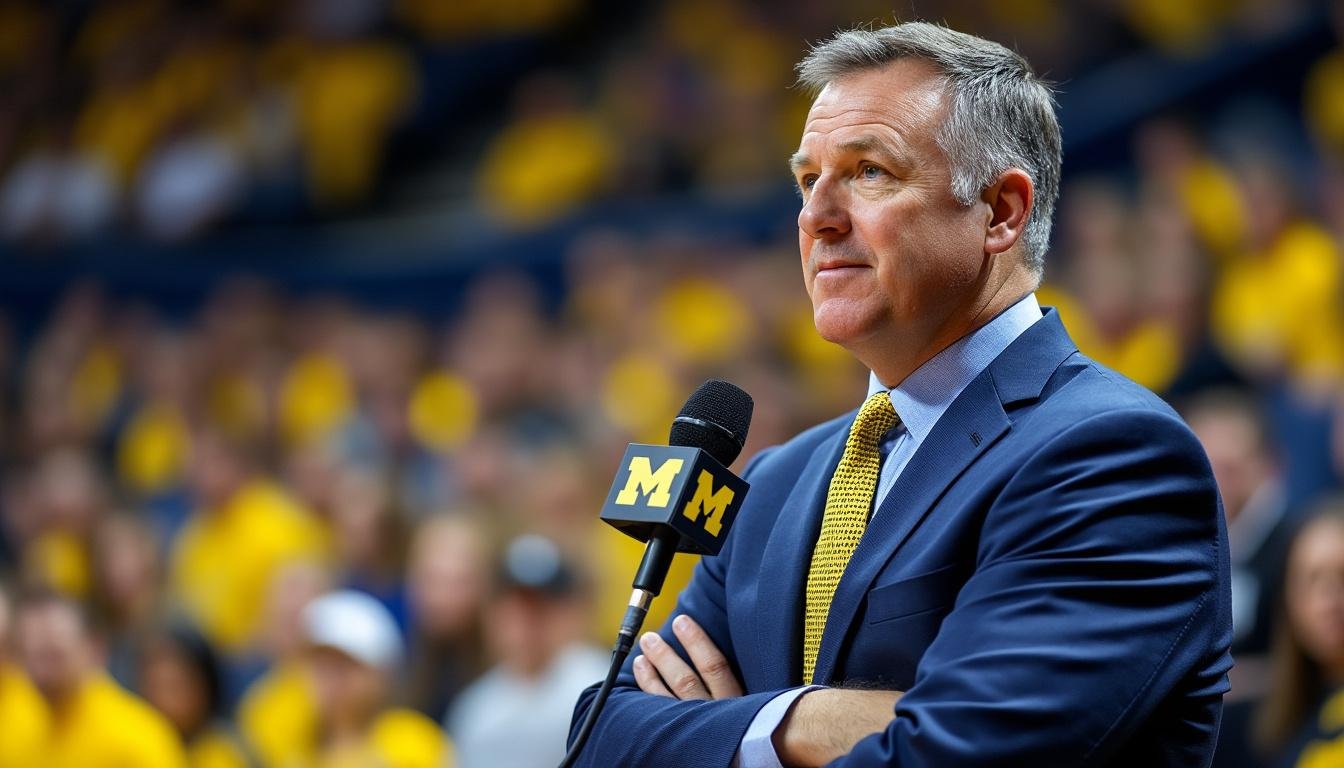
Dusty May’s Journey to the 2026 Final Four: A Full Circle Moment in College Basketball
Michigan basketball head coach Dusty May has navigated a remarkable path to lead the Wolverines back to the Final Four in 2026, an achievement laden with both personal history and professional significance. Having once experienced the intensity and excitement of the NCAA Tournament from a student manager’s perspective in Indianapolis, May’s return as a head coach represents a full-circle moment that resonates deeply with his coaching philosophy and aspirations.
As a junior and senior manager years ago, May recalls the ambition to break into coaching by seeking every opportunity to connect with accomplished coaches, often leveraging his ties to legendary figures such as Bob Knight. This early exposure to the college basketball ecosystem instilled in him a tenacious work ethic and an appreciation for the coaching craft, which now guides Michigan’s strategic play in the tournament.
The Wolverines’ 2026 journey to Indianapolis marks not only a milestone for the program but also a personal triumph for May. This experience has shaped his approach to the game and leadership style, emphasizing psychological safety, resilience, and a strong team ethos. According to May, returning to the Final Four in a city tied to his roots adds a layer of emotional gravity and inspiration for his squad, many of whom embrace the mission with similar earnestness.
May’s career trajectory—from a student manager chasing his coaching dreams to leading a high-caliber collegiate team—speaks to his deep understanding of the complexities of college basketball and the NCAA framework. His story, highlighted in coverage by Gregg Doyel, emphasizes the cultural and competitive factors that have driven his evolution as a coach dedicated to excellence and teamwork.
This background informs the coaching culture May fosters in his program, where every player is encouraged to be authentic and collective success is prioritized over individual accolades. His leadership in the Final Four exemplifies a blend of seasoned strategic thinking and a fresh, energetic connection to the players’ mindset, built on mutual trust and respect.

Strategic Battle: Michigan vs Arizona – Insights on Key Matchup Dynamics
As the Wolverines prepare to face Arizona in a highly anticipated NCAA Tournament clash, Coach Dusty May has illuminated the intricacies that will influence the outcome of this intense college basketball battle. Central to this matchup is the confrontation between the big men on each team, a dynamic that holds significant weight in determining control of the game’s pace and physical dominance.
May carefully evaluated the parallels between his Michigan squad and the Arizona Wildcats, noting a shared structural similarity, particularly in how both teams utilize experienced veterans coming off the bench to make decisive impacts. This layer of depth, combined with outstanding frontcourt size, sets the stage for a compelling battle on the boards and in the paint.
The intensity and basketball IQ displayed by both teams, exemplified by their well-rounded guards and adaptable defense schemes, underscore the tactical chess match this game will be. May predicts that the winner will likely emerge in the final minutes, emphasizing endurance, focus, and execution under pressure as critical factors.
In preparation sessions, Michigan has focused on mirroring Arizona’s style, allowing players to familiarize themselves with the opponent’s tendencies while refining their own adaptability. This approach aims to leverage Michigan’s defensive strengths and capitalize on fast-break opportunities, understanding that subtle matchups and in-game adjustments could tip the scales.
Furthermore, May’s coaching strategy incorporates detailed scouting reports and individualized player preparation, ensuring everyone understands their roles in containing Arizona’s scoring threats. This meticulous preparation typifies the elevated level of competition and professionalism seen at this stage in March Madness, where every possession carries monumental significance.
Such commitment to tactical nuance and player readiness, as captured in comments shared in a Wolverines Wire interview, displays how Michigan balances analytical insight with the emotional drive required at the highest level of college basketball.
Player Development and Team Chemistry: The Backbone of Michigan’s NCAA Tournament Success
A defining theme of Michigan’s impressive 2026 March Madness run has been the remarkable growth and selflessness of key players, with Coach Dusty May spotlighting individuals like Yaxel Lendeborg for their evolution on the court. Lendeborg’s journey to recognizing his own elite talent epitomizes the nurturing environment cultivated within the Wolverines’ program.
May emphasizes that Yaxel, known for his unselfish play and team-first mentality, required time to embrace a more aggressive style. Teammates encouraged him to seek personal scoring opportunities without undermining their collective goals, showing how mutual support fuels individual confidence and in turn enhances overall team dynamics.
This culture of encouragement extends beyond star players. May fosters a psychologically safe atmosphere where every athlete feels empowered to be their authentic self. This environment enhances camaraderie, allowing players like Aday, nicknamed the “Big Goof,” to blend their personalities with the team’s intensity, balancing professionalism and lightheartedness.
Competition drives daily practice sessions, where starters and reserves engage in spirited battles that elevate performance levels. This depth and internal rivalry help prevent complacency and promote continuous improvement, essential during grueling stretches of the season and the unforgiving tournament setting.
Effective communication and trust underpin retention strategies as well. May highlights that sustaining the right core players who share the same winning mentality is crucial for maintaining team cohesion and long-term success. This approach counters the challenges many programs face amid frequent roster turnover, especially in the era of the transfer portal.
The mix of returning talent and fresh recruits, often drawn by Michigan’s transparent and values-driven culture, positions the Wolverines as a formidable contender poised to build on their Final Four appearance in future seasons.
Managing Distractions and Preparing for High-Stakes Competition in March Madness
One of the subtler yet vital aspects of Coach Dusty May’s leadership in the 2026 tournament has been his focus on limiting external distractions to keep the team’s mindset razor-sharp. With the Final Four staged not far from his hometown, May acknowledges both the emotional buzz and the potential for off-court noise but insists on a disciplined, businesslike approach.
After their Elite Eight victory, May and his staff deliberately provided the team with limited rest before recommencing targeted workouts, film sessions, and strategic briefings for their matchup against Arizona. This careful balance of recovery and preparation highlights a measured response aimed at maintaining momentum while avoiding burnout.
The coaching staff also adapts based on past experience; reflecting on May’s previous Final Four run as an assistant at Florida Atlantic University, the team is now better equipped to handle media scrutiny, fan expectations, and logistical complexities. This maturity has translated into a sense of calm confidence that permeates the locker room and practice sessions.
The coaching philosophy extends beyond game tactics to managing players’ mental and physical wellness throughout the tournament’s grind. May emphasizes the importance of psychological safety, encouraging players to remain genuine and connected, which helps sustain morale and focus.
Furthermore, the Wolverines benefit from robust medical support and contingency plans, exemplified by their swift response to recent challenges such as a teammate’s allergic reaction. May’s leadership fosters a resilient team culture designed to thrive amid the inevitable pressures of March Madness.
This comprehensive approach to preparation and distraction management attests to the professionalism and strategic acumen that Coach Dusty May brings to the storied Michigan basketball program, aligning with contemporary demands of elite college basketball competition.
Building a Sustainable Program: Recruiting and Retention Strategies Under Coach Dusty May
Long-term success in college basketball hinges significantly on effective recruiting and player retention, and Michigan coach Dusty May has articulated a clear vision for sustaining the Wolverines’ competitive edge beyond the 2026 Final Four appearance. His experience navigating the transfer portal and curating a team identity has transformed Michigan into an attractive destination for high-caliber recruits and transfers alike.
May attributes the program’s rising profile to the culture established by previous squads, which exemplified unselfish play, resilience, and strong interpersonal bonds. This legacy eases recruiting efforts by showcasing a tangible blueprint for individual and collective development. Prospective players see Michigan as a place where their skills will be honed and their roles valued.
Recruitment has evolved with players now often conducting deeper due diligence, frequently reaching out to current team members to assess fit and program environment before committing. This shift reflects a more informed and autonomous athlete choice process, making trust and program reputation vital assets.
May stresses the importance of retaining the right players — those who embody the team-first ethos and share consistent goals. Retention is not merely about numbers but about preserving a core that fosters continuity and enforces unwritten team values. This approach counters the high turnover challenges common in many programs, especially amid growing player mobility in the modern college basketball landscape.
Under May’s stewardship, Michigan is poised to not only contend for championships in the near term but to solidify a lasting brand identity steeped in competitive integrity and mutual respect. This strategic foundation provides a blueprint for sustained excellence in the increasingly demanding environment of the NCAA Tournament.
For more on his coaching journey and philosophy, watch this detailed NBC Sports feature.
- Focus on team culture: Emphasizing psychological safety and authenticity
- Depth and practice intensity: Utilizing reserves for competitive internal games
- Recruitment evolution: Players conducting own evaluations before committing
- Retention philosophy: Prioritizing players aligned with team objectives and values
- Strategic preparation: Balancing rest and focused training ahead of key matches
What makes Dusty May’s coaching style effective in the NCAA Tournament?
Dusty May combines a strong emphasis on team chemistry, psychological safety, and tactical preparation, fostering an environment where players are encouraged to be authentic and collectively driven, enabling high performance under pressure.
How does Michigan’s big men matchup influence the game against Arizona?
The battle of the front lines will be pivotal, with both teams boasting size and veteran presence. Michigan’s ability to control the paint, secure rebounds, and contest shots will be integral to their chances against Arizona’s similarly formidable frontcourt.
In what ways has Michigan adapted to limit distractions during the Final Four?
Coach May emphasizes disciplined routines, limiting off-court distractions, and fostering psychological safety. The team maintains a professional yet supportive atmosphere, focusing on recovery, media management, and maintaining mental wellness.
How has the transfer portal impacted Michigan’s recruiting strategy?
Michigan uses the transfer portal strategically to build a balanced roster, focusing on players’ fit with the team’s culture and competitive goals. The coaching staff also values thorough vetting and retention to preserve team cohesion.
What role does player retention play in Michigan’s success?
Retention is critical, but only of players who embody the team-first mentality and competitive intensity. Keeping such players ensures continuity, preserves team values, and strengthens the squad’s ability to perform in high-pressure tournament settings.
