


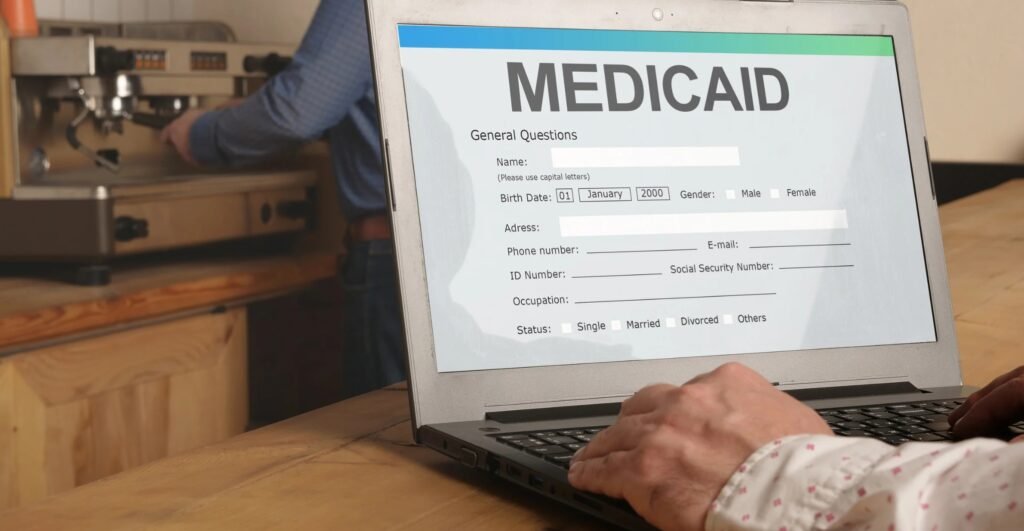
- OBBBA includes Medicaid community engagement (work) requirements for many adults ages 19–64 enrolled through Medicaid expansion.
- Family caregivers who are the primary caregiver for children age 13 and under, or for any person with a disability of any age, are exempt — but they must be able to prove their caregiving role to their state Medicaid program.
- States have until January 1, 2027 to adopt the new rules and may request a one-time extension (up to 2029) if they show progress; the law also provides $200 million to support state implementation efforts.
- AARP research estimates about 7.3 million family caregivers ages 18–64 were on Medicaid in 2025; family caregivers provide an average of 35 hours per week of unpaid care and roughly $600 billion in annual unpaid services nationwide.
- The Congressional Budget Office projects the law will include large Medicaid spending reductions; work requirements are a major component of those savings.
What the new Medicaid community engagement (work) rules require


The law requires most non-exempt adult Medicaid expansion enrollees ages 19–64 to report at least $80 hours per month of qualifying activity — employment, training, job search, school, volunteer work or similar community engagement — to remain eligible for Medicaid. Enforcement and verification details are left to states, so how the rule affects real people will vary by state.
Who is clearly exempt
- Primary family caregivers providing care for children age 13 or younger.
- Primary family caregivers providing care for persons of any age who have a documented disability.
These caregivers should not be subject to the $80/month community engagement requirement — but they will need to document and report their caregiving status as directed by their state Medicaid office.
Why implementation details matter for caregivers
States have broad discretion in how they implement the law’s verification and reporting processes. That discretion can either protect caregivers from unintended coverage loss or create new hurdles that increase “coverage churn.” AARP’s research highlights several state-level choices that can make a big difference for family caregivers:
State implementation approaches that help caregivers (recommended)
- Allow simple self-attestation (checkbox or signed statement) to establish caregiver status rather than demanding extensive paperwork.
- Limit required documentation and accept multiple sources of proof (medical records, disability determinations, school or child-care records, applications for other benefits that note caregiving responsibilities).
- Use the shortest verification window allowed — one month of qualifying activity — for initial and renewal checks to reduce administrative burden.
- Conduct renewal checks less frequently rather than monthly, to limit coverage disruptions for caregivers whose circumstances are stable.
- Partner with community organizations, Area Agencies on Aging, schools, clinics and local providers to do outreach and provide help completing forms.
State practices that could create problems (to avoid)
- Requiring frequent or complex re-verifications that caregivers struggle to complete while providing unpaid care.
- Restricting acceptable documentation to narrow categories (for example, only formal medical certifications) that are hard for families to obtain quickly.
- Poor outreach or confusing notices that lead eligible caregivers to miss deadlines and lose coverage.
Key dates, funding and federal guidance


- State deadline to adopt rules: January 1, 2027 (states may apply for a one‑time extension — up to two years — if they demonstrate progress toward compliance).
- Implementation support: The law provides $200 million in federal funds to help states build systems and do outreach.
- Budget impacts: The Congressional Budget Office identified roughly $911 billion in Medicaid changes in the law, with about $326 billion associated with work requirements.
- Federal guidance: The Centers for Medicare & Medicaid Services (CMS) will issue rules and guidance describing allowable state approaches; states and advocates are watching for interim and final rules to clarify verification, reporting, and allowable exemptions.
Practical steps family caregivers should take now
Even though states have time to design their programs, caregivers should act proactively to protect coverage and reduce stress later. Below is a clear checklist you can use today.
- Gather documentation now: Collect records that demonstrate the person(s) you care for and your caregiving role. Useful documents include:
- Medical records or care plans that note the care recipient’s disability or need for assistance.
- School records, birth certificates or custody documents for children you care for who are age 13 or younger.
- Letters from doctors, therapists, case managers or home health agencies describing the care recipient’s needs.
- Benefit applications (Social Security, VA, state disability) that list the care recipient or caregiver information.
- Make contact with your state Medicaid office: Ask how your state plans to verify caregiver exemptions once rules are in effect, and request clear instructions on what you will need to submit and when.
- Sign up for communications: Provide your current address, phone number and email to Medicaid so you receive notices — and check spam folders for emails from state health agencies.
- Use local help resources: Reach out to your Area Agency on Aging, local community health centers, or AARP state offices for assistance understanding and documenting caregiver status.
- Keep records of caregiving hours: Keep a simple log of weekly hours and tasks (bathing, medication, transportation, supervision). These logs can support a claim that you are providing substantial unpaid care.
- Advocate with your state: Join or contact advocacy groups (AARP, disability and caregiver coalitions) to encourage your state to adopt caregiver‑friendly verification approaches, like self-attestation and minimal documentation.
- Prepare a backup plan: If you rely on Medicaid for critical services, identify alternative supports now (local respite providers, veteran services, community programs) in case administrative problems temporarily interrupt coverage.
Sample email to your state Medicaid office
Copy, paste and customize this message to start a conversation with your Medicaid office or health plan about documenting your caregiver exemption.
Subject: Request for caregiver exemption guidance — Medicaid

Hello,

I am a Medicaid enrollee and a family caregiver. I provide the primary unpaid care for [name and relation — e.g., my 8-year-old granddaughter / my adult son with a disability] and would like information about how to document and confirm my exemption from the Medicaid community engagement (work) requirement under the new federal law.

Please tell me:
1) What documentation you will accept to verify my caregiver status.
2) Whether self-attestation or a simple checkbox is allowed.
3) When and how I should submit proof (initial enrollment and renewals).
4) Where I can get help completing any forms.

Thank you for your guidance.

Sincerely,
[Your name]
[Medicaid ID or DOB]
[Phone number / Email]
Resources — where to get help
National resources
- Medicaid.gov — official federal information and state links
- AARP Caregiving Resources — research, toolkits and state-specific guidance
- Eldercare Locator — connect to local Area Agencies on Aging and services
State and local help
Contact your state Medicaid office (find links at Medicaid.gov), Area Agency on Aging, local community health center, or legal aid clinic for personalized help with documentation, appeals, and outreach.
“`