
In 2025, staying ahead of cancer requires more than luck—it demands a proactive approach to screening tailored to your age and risk factors. Advances in medical science and guidelines from authorities such as the American Cancer Society and the National Cancer Institute have refined recommendations, empowering individuals to catch cancer early, when treatment success rates are highest. Whether you’re in your 20s or well into your golden years, understanding when and how often to undergo specific cancer screenings can radically increase your chances of survival and improve your quality of life.
While the types of screenings vary by age and risk profile—from colonoscopies in middle age to mammograms starting at 40—the underlying principle is universal: early detection saves lives. Incorporating routine tests into your healthcare ensures that diseases like breast, colorectal, cervical, lung, and prostate cancers can be identified before symptoms arise. As an oncologist armed with current insights from leading institutions like the Mayo Clinic, Cleveland Clinic, and Johns Hopkins Medicine, I emphasize the critical role of these screenings alongside healthy lifestyle choices, such as maintaining a healthy weight, quitting tobacco, and regular exercise, endorsed by the CDC and Cancer Research UK.
With each decade, specific screenings become non-negotiable checkpoints on your healthcare journey. This detailed guide synthesizes expert recommendations and cutting-edge research, clarifying exactly what screens you need and when. By acting now and consulting with your healthcare provider to personalize your screening schedule, you place yourself firmly in the driver’s seat of your health, potentially forestalling life-changing diagnoses. Discover the screenings vital for each stage of your life and take control of your cancer prevention plan today.
Key Cancer Screenings by Age: A Personalized Guide to Early Detection
Expert organizations like the American Society of Clinical Oncology and Memorial Sloan Kettering Cancer Center have established evidence-based screening protocols that evolve with your age and risk factors. Below, we break down the essential screenings arranged by age bracket, providing you a clear roadmap to safeguard your health.

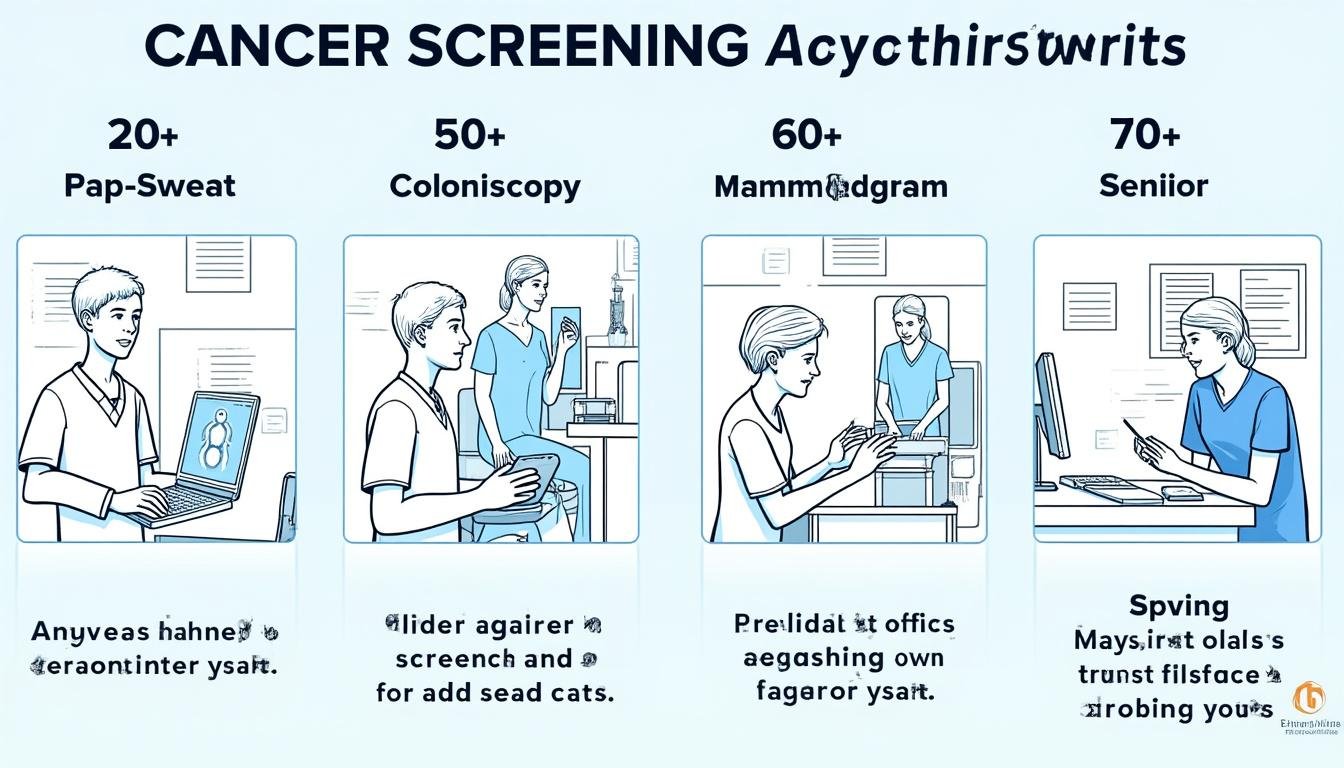
Cancer Screenings for Adults in Their 20s and 30s
Though cancer risk is generally lower in your 20s and 30s, there are critical screenings and checkups to keep your health on track, especially for women and individuals with family histories of cancer.
- Cervical Cancer Screening: Start at age 21 with a Pap test every three years, or every five years if combined with HPV testing, until age 65 as recommended by the American Cancer Society.
- Skin Checks: Annual skin examinations are advised by experts at Johns Hopkins Medicine, particularly for those with fair skin or a history of sun exposure.
- Breast Awareness: While formal mammogram screening is generally begun at 40, monthly self-breast exams and clinical breast exams every 3 years are encouraged.
- Lifestyle Guidance: This stage is perfect for adopting habits like quitting tobacco and maintaining a healthy weight, supported by resources from the CDC and Cancer Research UK.
Crucial Screenings for Ages 40 to 50: Preparing for Midlife Health
As your risk for several cancers increases, this age period requires heightened vigilance with screenings that can detect malignancies at treatable stages.
- Breast Cancer Screening: Annual or biennial mammograms starting at age 40, especially for women with a family or personal history of breast or ovarian cancer.
- Colorectal Cancer Screening: Begin regular screening at age 45, with options including colonoscopies every 10 years or annual stool-based tests, as per the National Cancer Institute and American Cancer Society guidelines.
- Prostate Cancer Discussion: Men at average risk should discuss PSA testing starting at 50, or earlier at 40-45 for those with high-risk factors like family history or African American descent.
- Lung Cancer Screening: Recommended annually from age 50 for individuals with significant smoking history, defined as a 20-pack-year history and current smokers or recent quitters.
Adopting a cancer-conscious mindset in this stage can significantly impact long-term health outcomes. For more in-depth information, visit American Cancer Society’s screening guidelines by age.

Essential Screenings After Age 50: Managing Risks and Sustaining Wellness
Post-50, many cancers become more prevalent, but early detection remains a powerful tool to maintain health and longevity. Adherence to screening schedules optimized by organizations like the Cleveland Clinic and Mayo Clinic saves countless lives yearly.
- Colorectal Cancer Screening: Continue screenings with colonoscopies or stool tests until approximately age 75, or based on individual health and life expectancy.
- Breast Cancer Screening: Women 55+ may extend mammogram intervals to every 2 years but can opt for annual screenings depending on personal and family risk factors.
- Prostate Cancer Screening: Maintain annual or biennial PSA testing while life expectancy exceeds 10 years.
- Lung Cancer Screening: Annual low-dose CT scans recommended through age 80 for eligible individuals with relevant smoking history.
Screenings at this stage must be balanced with overall health status; decisions should be individualized in consultation with your healthcare provider. Explore the detailed recommendations at Cleveland Clinic’s cancer screening resource.
Why Lifestyle Choices Amplify Screening Benefits at Any Age
Cancer prevention is not solely dependent on screening; integrating healthy habits intensifies the protective effect. The Susan G. Komen organization and CDC consistently emphasize lifestyle as a keystone in cancer control.
- Quit Tobacco: There is no safe level of tobacco use. Avoid tobacco products and exposure to secondhand smoke to drastically reduce the risk of various cancers.
- Maintain Healthy Weight: Excess body weight amplifies cancer risk. Control your weight through balanced eating and regular exercise.
- Stay Physically Active: Adults should target 150-300 minutes of moderate activity weekly; kids and teens at least one hour daily.
- Healthy Diet: Emphasize fruits, vegetables, whole grains and limit red/processed meats along with sugary drinks.
- Alcohol Moderation: Limit consumption to one drink per day for women and two for men, or avoid altogether.
Utilize available support resources such as Prevent Cancer Foundation’s guidelines to align your lifestyle with cancer prevention.